
Key takeaways
- The Buchinger fasting method is a medically supervised liquid fast providing roughly 200-250 kcal per day from vegetable broth, juice and honey.
- A 2019 study of 1,422 people found weight loss ranging from 3.2 kg on a 5-day fast to 8.6 kg on a 20-day fast.
- In that study 93.2% of participants reported no hunger, and 84.4% of those with existing complaints said symptoms improved.
- The method suits generally healthy adults seeking a reset, and it is not appropriate for pregnant women, children or people with certain medical conditions without clearance.
- Supervision matters because a fast changes blood pressure, electrolytes and medication needs, all of which need monitoring.
The Buchinger fasting method is a medically supervised fast in which you drink vegetable broth, juice and water instead of eating solid food, taking in only about 200 to 250 calories a day. It is a form of modified fasting, developed in Germany, designed to give the body a prolonged rest from digestion while keeping the faster safe, comfortable and monitored throughout.
That combination of near-zero food and close medical oversight is what sets it apart from the fasting trends most people have tried. This guide explains where the method came from, how it differs from water-only and intermittent fasting, what a typical day looks like, who it suits, and why supervision is not optional.
Where Did the Buchinger Fasting Method Come From?
The Buchinger fasting method grew out of early 20th-century German fasting medicine and the personal recovery of its founder, the physician Otto Buchinger. According to historical accounts, Buchinger developed severe rheumatoid arthritis after an illness and turned to an extended therapeutic fast to treat it. His recovery convinced him to build a clinical practice around supervised fasting.
What began as one doctor's experiment matured into a structured medical protocol. Over the following decades, German fasting clinics refined the approach into the modified, nutrient-assisted format used today. The method keeps the metabolic benefits of a long fast while softening the discomfort and risk that a pure starvation fast would carry.
This heritage still shapes the modern retreat experience. At Vietnam Detox, the Buchinger protocol provides the clinical backbone, which is then paired with Vietnamese healing practices such as herbal therapies and rest-focused daily rhythms. The science comes from Germany; the surroundings and recovery culture come from Vietnam.
How Does It Differ From Water and Intermittent Fasting?
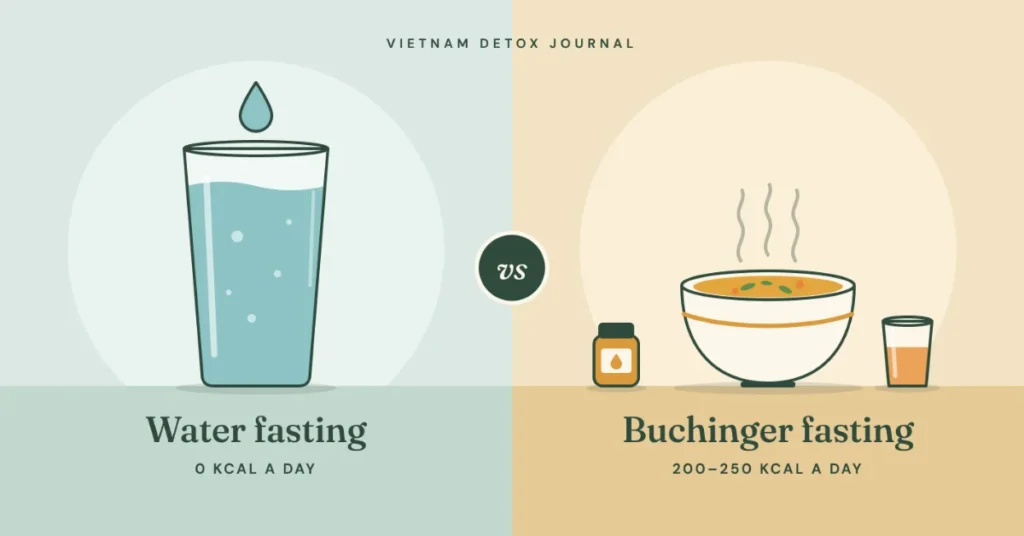
The main difference is that the Buchinger method is a modified fast rather than a total one. Where water fasting permits only water, the Buchinger approach supplies a small, deliberate amount of nutrition. That trickle of carbohydrate from juice and honey is meant to blunt the harshest side effects and help people keep going for days rather than hours.
Intermittent fasting works on a different axis entirely. It cycles eating and fasting within a day or week, such as the 16:8 pattern, and you still eat normal meals during the eating window. The Buchinger method instead removes solid food for a continuous block of days while a clinical team watches your response.
A 2024 narrative review in Oxford's Nutrition Reviews examined the efficacy and safety of prolonged water-only fasting and noted that longer fasts carry real risks that warrant medical oversight (Nutrition Reviews, 2024). The small nutrient intake in the Buchinger format is one way clinics try to make a multi-day fast more tolerable than a strict water fast.
That extra tolerability matters for adherence. A water-only fast can bring sharper hunger, lower energy and a harder adjustment period, which leads some people to abandon it early. The Buchinger model keeps the faster in a nutritional ketosis state while giving the body a steady, minimal supply of fuel. The aim is a fast people can complete, under watch, rather than the most extreme version of one.

What Does a Typical Fasting Day Look Like?
A typical Buchinger day is built around liquids, movement and rest, with total intake of roughly 200 to 250 calories. In the 2019 observational study of this program, that daily amount came from vegetable juice and broth, alongside 2 to 3 litres of water and herbal tea (PLOS ONE, 2019).
The rhythm of the day is deliberately gentle. A typical structure includes:
- Morning: warm water or herbal tea, light movement such as walking or stretching, and a check-in with the supervising team.
- Midday: a glass of freshly pressed fruit or vegetable juice, the main source of the day's small calorie load.
- Evening: a bowl of clear vegetable broth, sometimes with a teaspoon of honey earlier in the day for a mild energy lift.
- Throughout: steady hydration, rest periods, and practices like meditation or gentle yoga.
Supervision threads through all of it. Staff track blood pressure, hydration and how each person feels, adjusting the plan when needed. This is where a guided retreat differs sharply from fasting alone at home. At Vietnam Detox, this daily structure is delivered with trained staff monitoring each guest, so the broth-and-juice framework is backed by people who can respond if something changes.

Who Is the Buchinger Method For?
The method suits generally healthy adults who want a structured reset and are willing to be supervised. The published evidence is encouraging for this group. In the 2019 study of 1,422 people fasting for 4 to 21 days, 93.2% reported no feelings of hunger, and among 404 participants with pre-existing health complaints, 84.4% said their symptoms improved (PubMed, 2019).
Reported outcomes scaled with length. Weight loss ranged from 3.2 kg on a 5-day fast to 8.6 kg on a 20-day fast, and average systolic blood pressure fell from about 131.6 to 120.7 mmHg across the group. The study authors reported that adverse effects occurred in fewer than 1% of participants, which supports the method's safety profile when it is properly run.
Some people should avoid it or only proceed with medical clearance. The method is not appropriate for pregnant or breastfeeding women, children and adolescents, or people who are underweight. Anyone with diabetes, an eating disorder history, kidney or liver disease, or who takes medication that depends on food intake needs a doctor's assessment first. When in doubt, a fast should not begin without professional sign-off.

Why Does Medical Supervision Matter During a Fast?
Supervision matters because a multi-day fast changes the body in ways that need monitoring. The same 2019 PLOS ONE study recorded a measurable drop in blood pressure, with systolic readings falling by roughly 11 mmHg on average. For someone already on blood-pressure medication, an unmonitored change like that can become a problem.
Fasting also shifts electrolytes, hydration and blood sugar. A trained team can spot early warning signs, such as dizziness, an irregular heartbeat or unusual fatigue, and respond before a minor issue becomes serious. They also manage the refeeding phase, which is the point where reintroducing food too quickly can cause harm.
There is a practical reason supervision improves the experience, too. Having staff handle the logistics, the timing of juice and broth, the hydration targets, the rest schedule, frees the faster to actually rest. A supervised program is built so that the hardest decisions are already made for you by people trained to make them.
Starting a Buchinger Fast Safely
If a multi-day fast appeals to you, the sensible next step is a short consultation with a medical professional to confirm it fits your health profile, followed by choosing a supervised setting rather than going it alone. A guided retreat gives you the daily monitoring, the correct broth-and-juice structure and the refeeding support that make the difference between a safe reset and a risky experiment. If you are considering a first fast, speak with your doctor this month and shortlist one supervised program before you book anything.
Frequently asked questions
How many calories do you eat on the Buchinger fast?
You consume roughly 200 to 250 calories a day, drawn from vegetable broth, fruit or vegetable juice and a small amount of honey, plus 2 to 3 litres of water and herbal tea.
How long does a Buchinger fast last?
Most programs run between 4 and 21 days. Shorter fasts of 5 to 7 days are common for first-timers, while longer fasts are reserved for experienced fasters under close supervision.
Is the Buchinger method the same as water fasting?
No. Water fasting allows only water, while the Buchinger method provides a small amount of nutrients through broth and juice. This modified approach aims to reduce side effects and make the fast easier to sustain.
Do you lose muscle on a Buchinger fast?
The small amount of carbohydrate from juice and honey is intended to limit muscle breakdown compared with a strict water fast. Supervision and gentle movement help preserve lean tissue, though some loss can occur on longer fasts.
Can I do a Buchinger fast at home?
Short, gentle versions are sometimes done at home, but the traditional method relies on medical supervision, daily monitoring and a structured environment. People on medication or with health conditions should fast only under professional care.