
Key takeaways
- A genuinely effective detox retreat uses medically supervised fasting, not just spa treatments. In the largest Buchinger study, 84.4% of participants with health complaints reported improvement (PLOS ONE, 2019).
- Medical fasting retreats and luxury spa-only programs serve different goals. One targets metabolic recovery; the other targets rest and pampering.
- Coastal Da Nang suits people who want sea air and gentle movement; sacred Yen Tu suits those seeking stillness, hiking, and spiritual reset.
- Fasting activates autophagy, the cellular cleanup process behind the 2016 Nobel Prize in Physiology or Medicine.
- Choose based on your recovery goal: metabolic reset, burnout recovery, or a calmer break with light detox support.
If you are comparing providers right now, one factor separates a real recovery program from a pleasant spa break: clinical structure. The best detox retreats in Vietnam combine medically supervised fasting with daily movement, rest, and a controlled return to food.
This guide compares the main retreat styles across the country, explains why medical fasting outperforms spa-only pampering for genuine recovery, looks at two standout locations in coastal Da Nang and sacred Yen Tu, and helps you choose based on your own goals.
What Makes a Detox Retreat Genuinely Effective?
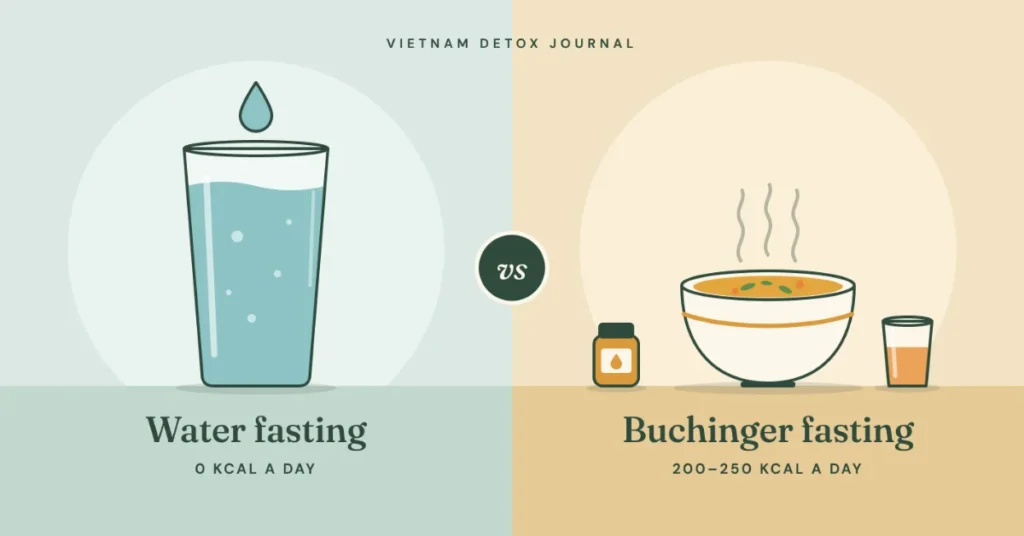
A genuinely effective detox retreat is built on supervised therapeutic fasting, not treatments alone. In the largest published study on the Buchinger method, 84.4% of participants with pre-existing health complaints reported improvement after fasts of 4 to 21 days (PLOS ONE, 2019).
That same study of 1,422 people offers a useful benchmark for safety and comfort. Adverse effects were reported in under 1% of participants, and 93.2% said they experienced an absence of hunger during the fast. Those two numbers matter when you are choosing a program. They show that supervised fasting is both tolerable and low-risk when run properly.
What should you actually look for? A credible retreat screens your health before you arrive, assigns medical or clinical oversight during the fast, keeps you moving with gentle daily activity, and manages the refeeding days with care. Skip any of those steps and the "detox" becomes marketing.
Vietnamdetox builds its programs around exactly this structure, pairing the German Buchinger fasting protocol with Vietnamese healing practices so the clinical side and the restorative side reinforce each other.
How Do the Top Retreat Styles Across Vietnam Compare?
Detox retreats in Vietnam fall into three broad styles: medical fasting programs, hybrid wellness retreats, and spa-only resorts. The wellness tourism market they sit inside reached $894 billion in 2024, growing 13.8% year over year (Global Wellness Institute, via PR Newswire, 2025).
Medical fasting programs put a clinical protocol at the center. You are screened, supervised, and guided through a defined fasting window followed by structured refeeding. Hybrid retreats blend light fasting or clean eating with yoga, meditation, and bodywork. Spa-only resorts focus on massage, sauna, and comfort, with food that is healthy but unrestricted.
The right style depends on what you came for. Someone recovering from burnout needs the stillness and structure a clinical program provides. Someone who simply wants a quiet week with good food and a massage schedule will be happier at a spa resort. Matching style to goal is where most people go wrong.
Medical Fasting vs Luxury Spa-Only Programs
Medical fasting and luxury spa-only programs serve two different purposes. One drives measurable physiological change; the other delivers comfort and rest. The distinction comes down to what happens inside your body.

Prolonged fasting triggers autophagy, the cellular cleanup process in which cells break down and recycle their own worn-out components. The science behind it is serious enough that it earned the 2016 Nobel Prize in Physiology or Medicine, awarded to Yoshinori Ohsumi for discovering its mechanisms (The Nobel Prize, 2016). A spa day does not switch this process on. A multi-day supervised fast does.
That does not make spa programs worthless. They are excellent for people who are tired rather than depleted, who want to decompress without the discipline of a fast. The problem arises when a resort markets a few massages and a juice menu as a "detox" while delivering none of the metabolic work. If measurable recovery is your aim, the supervision and the fasting protocol are the parts you are paying for.
A practical way to read any brochure: look for the words screening, supervision, and refeeding. Programs that describe all three are doing the clinical work. Programs that list only treatments are selling rest, which is fine as long as you know that is what you are buying.
Coastal Da Nang and Sacred Yen Tu: Two Settings That Shape Recovery
Location is not cosmetic. The setting of a detox retreat shapes how you move, sleep, and recover, and Vietnam offers two very different environments in Da Nang and Yen Tu. Both support fasting, but they suit different temperaments.
Da Nang sits on the central coast, with long beaches, warm sea air, and easy flat terrain. It suits people who want gentle outdoor movement: morning walks along the shore, light stretching, and sea swimming on refeeding days. The climate and the open horizon make the fasting days feel less confined, which helps first-time fasters.

Yen Tu is different in character. It is a sacred mountain region north of Ha Long, long associated with Vietnamese Buddhism and pilgrimage. The atmosphere is quiet, forested, and contemplative. Yen Tu suits people who want stillness, gentle hikes among the pines, and a spiritual dimension to their reset. For anyone recovering from mental exhaustion, that silence is often the active ingredient.
Neither location is better in the abstract. A high-energy professional who struggles to sit still may do better with the sea air and movement of Da Nang. Someone craving solitude and reflection will find more in the mountains.
How to Choose a Detox Retreat Based on Your Recovery Goals
Choose your retreat by naming your goal first, then matching the program to it. With wellness travel growing fast, there is no shortage of options competing for your attention, so clarity about your own aim is what cuts through the noise.
If your goal is metabolic reset, weight regulation, or improving blood pressure and energy, choose a medically supervised fasting program and plan for 7 days or more. If your goal is burnout recovery, prioritize structure plus a calm setting; a fasting program in a quiet location like Yen Tu does double duty. If you simply want to rest and feel cared for, a spa-focused stay is honest and effective for that purpose.
Corporate groups and private parties have a further consideration: supervision scales differently than massages do. A clinical program that can screen and monitor a whole team is a different operation from a resort that books spa slots. Ask how medical oversight works for groups before you commit.
Whatever you choose, confirm three things in writing: who supervises the fast, what the daily schedule looks like, and how refeeding is handled. A provider like Vietnamdetox that runs the full Buchinger protocol alongside Vietnamese healing practices should be able to answer all three without hesitation. Book a short discovery call, ask those questions, and let the clarity of the answers guide your decision.
Frequently asked questions
What is the best type of detox retreat in Vietnam?
The best type depends on your goal. For measurable metabolic recovery, a medically supervised Buchinger-method fasting retreat is the strongest option. For rest alone, a spa-focused program works. Vietnamdetox combines supervised fasting with Vietnamese healing practices.
Is fasting at a detox retreat safe?
Under medical supervision, prolonged therapeutic fasting is well tolerated. In a study of 1,422 people, adverse effects were reported in less than 1% (PLOS ONE, 2019). Supervision is the key safety factor, which is why program quality matters.
How long should a detox retreat last?
Most therapeutic fasting programs run between 4 and 21 days. Shorter stays suit a reset; longer stays suit deeper recovery. Beginners often start with a 7-day structured fast before considering longer programs.
Where are the best detox retreats located in Vietnam?
Coastal Da Nang and the sacred Yen Tu mountain region are two of the strongest settings. Da Nang offers sea air and gentle outdoor movement; Yen Tu offers quiet, forest hikes, and a contemplative atmosphere.
What makes a detox retreat effective rather than just relaxing?
Effectiveness comes from structure: medical screening, supervised fasting, a controlled refeeding phase, and daily movement. Spa treatments add comfort but do not drive the metabolic changes behind real recovery.