Healthy Ageing Journal
A simple squeeze of a hand dynamometer reveals more about how you are ageing than many expensive tests. Here is what the research shows, what healthy values look like for Vietnamese adults, and how to build a stronger grip at any age.
On the first and last day of every retreat, our guests sit down for a wellness check-up. Alongside blood pressure, body composition and a few honest questions about sleep and stress, we hand each guest a small device called a hand dynamometer and ask them to squeeze it as hard as they can.
It takes less than a minute, and it regularly surprises people. Many guests, including slim and active-looking people in their thirties and forties, record values well below what we would expect for their age. Office workers, people who travel everywhere by car or motorbike, and those who have never done any strength training are often the most surprised.
We do not measure grip strength to rank anyone. We measure it because few numbers say so much about how well the body is ageing, and because it is one of the easiest markers to improve.
Grip strength has been studied for decades, and the evidence is remarkably consistent. One of the largest studies followed almost 140,000 adults in 17 countries. Every 5 kg less grip strength was linked with a 16% higher risk of dying from any cause over about four years, and a 17% higher risk of dying from heart disease or stroke. Grip strength predicted death more strongly than systolic blood pressure.
The link extends to the brain. A 2026 review of 60 studies involving around 380,000 people found that those with a stronger grip, and those who maintained their grip strength over time, were roughly 19% less likely to experience cognitive decline or dementia.
A second 2026 review, which pooled data from about 900,000 people, looked at the difference between the two hands. A marked imbalance was linked with a 29% higher risk of dying from cardiovascular disease, and people with a grip that was both weak and uneven had a 39% higher risk of dying from any cause.
Key insight
Grip strength reflects the health of muscles, nerves, heart and brain together. Squeezing a ball all day will not, on its own, protect you from disease. Building whole-body strength and fitness is what makes the difference, and your grip will follow.
A firm grip is not only about the muscles in the hand and forearm. The signal starts in the brain, travels down the spinal cord and along the nerves to dozens of small and large muscles, which must fire together at exactly the right moment. When any link in this chain weakens, grip strength falls.
Researchers who study ageing compare the hands to puppets controlled by the brain. In a recent study of adults aged 65 to 87, participants squeezed with one finger at a time and then with all four fingers together. The combined force is normally a little less than the sum of the single fingers. The larger this gap, the lower participants scored on a standard test of memory and thinking. Around half of them could not complete the finger task at all.
This is why grip strength is now regarded as a marker of overall vitality. It reflects muscle mass, nerve function, circulation, nutrition, hormonal balance and activity levels. A low value is rarely the problem itself. It is a signal worth listening to.
Long before it appears in research statistics, a weak grip shows up in daily life. Opening a jar, carrying the shopping, holding the handlebars of a motorbike on a bumpy road, lifting a grandchild, holding a handrail on the stairs or getting up from a low chair all depend on the strength of your hands and arms.
Large studies of older adults show that people with low grip strength are about one and a half times as likely to need help with basic activities such as washing, dressing and eating, and with practical tasks such as shopping, cooking and managing money. In a study of almost 18,000 older Americans, every 5 kg less grip strength was linked with a 20% higher chance of difficulty eating and a 14% higher chance of difficulty walking or bathing.
What a weak grip can mean
The reverse is also true. People who stay strong tend to remain independent for longer, recover faster and report a better quality of life.
Strength is not about vanity. It is what allows you to carry your own bags, play with your grandchildren and live on your own terms for as long as possible.
The Vietnam Detox Journal Tweet
Vietnam is ageing faster than almost any other country in the region. Around 16.5 million people, roughly one in six, are now aged 60 or over, and the country is expected to become an aged society in the mid 2030s. This shift is happening within a single generation.
Age-related muscle loss, known as sarcopenia, is already common. A large study in Ho Chi Minh City found it in about 14% of adults aged 50 and over, rising to around half of men aged 80 and over. In geriatric clinics in Hanoi, between a third and a half of older patients have grip strength below the Asian clinical threshold. The warning signs are visible even in midlife: in a study in Cần Thơ, almost a quarter of women aged 40 to 55 already had a low grip.
Daily life has changed quickly too. Many people who grew up with physical work now sit at desks, travel by motorbike or car and rarely lift anything heavy. Strength that was once built automatically now has to be built on purpose.
Because body size and reference values differ between populations, Western norms are not a fair yardstick for Vietnamese adults. That is why our chart is based on Vietnamese reference data combined with the thresholds used by Asian sarcopenia experts.
The chart shows typical values for Vietnamese adults by age and sex, measured with the dominant hand. The average Vietnamese man grips about 36 kg and the average woman about 23 kg. Strength peaks between the ages of about 20 and 50, then declines gradually, more steeply after 60.
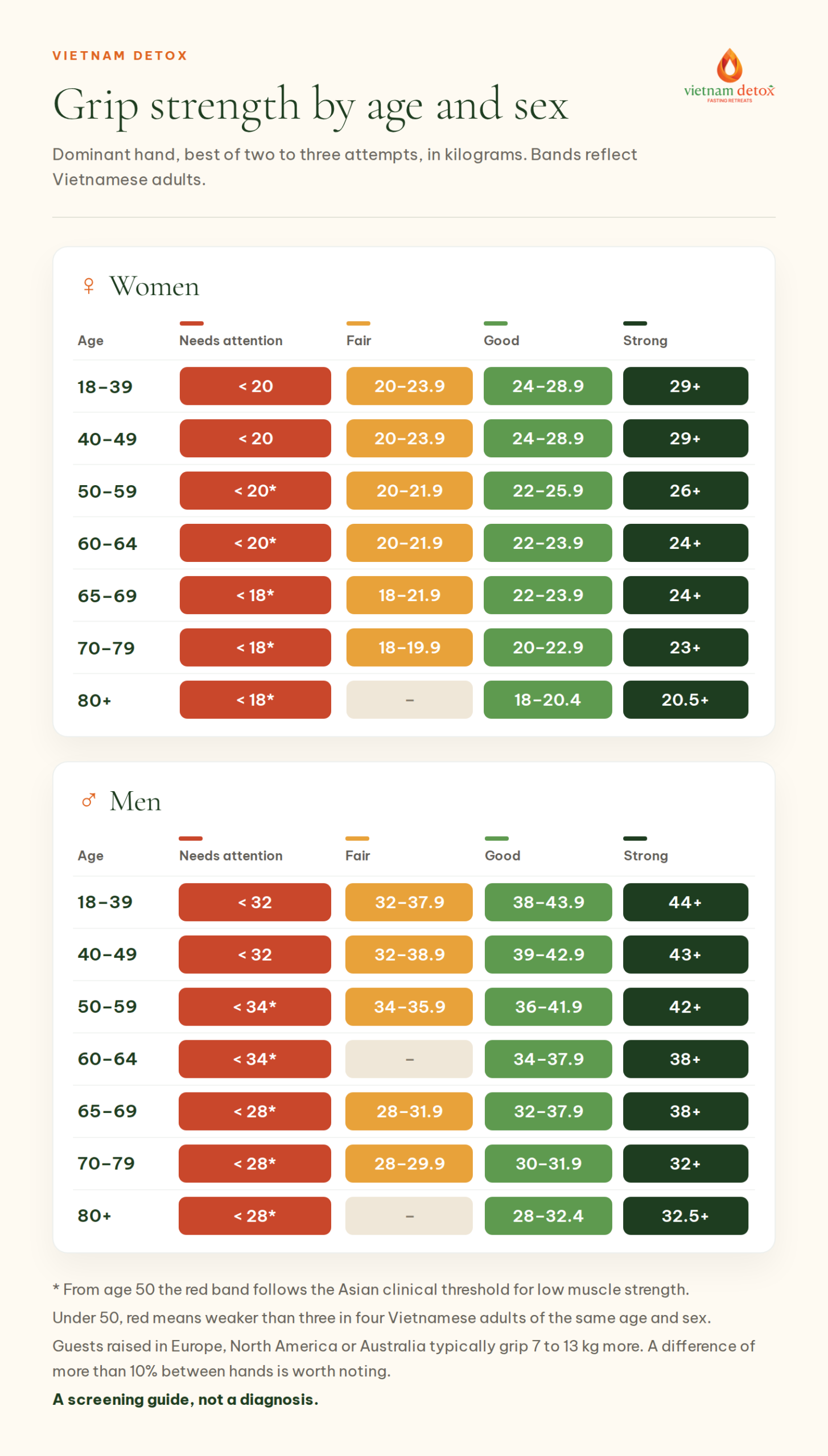
The four bands
The dominant hand is usually up to 10% stronger than the other. A gap of more than 10% is worth noting. A gap of 20% or more, especially if it is new, is worth discussing with a doctor.
Adults who grew up in Europe, North America or Australia tend to be taller and heavier, and their reference values are higher. In the United Kingdom, typical peak values are around 51 kg for men and 31 kg for women. If you are one of our international guests, a result in the Fair band may already be lower than it should be.
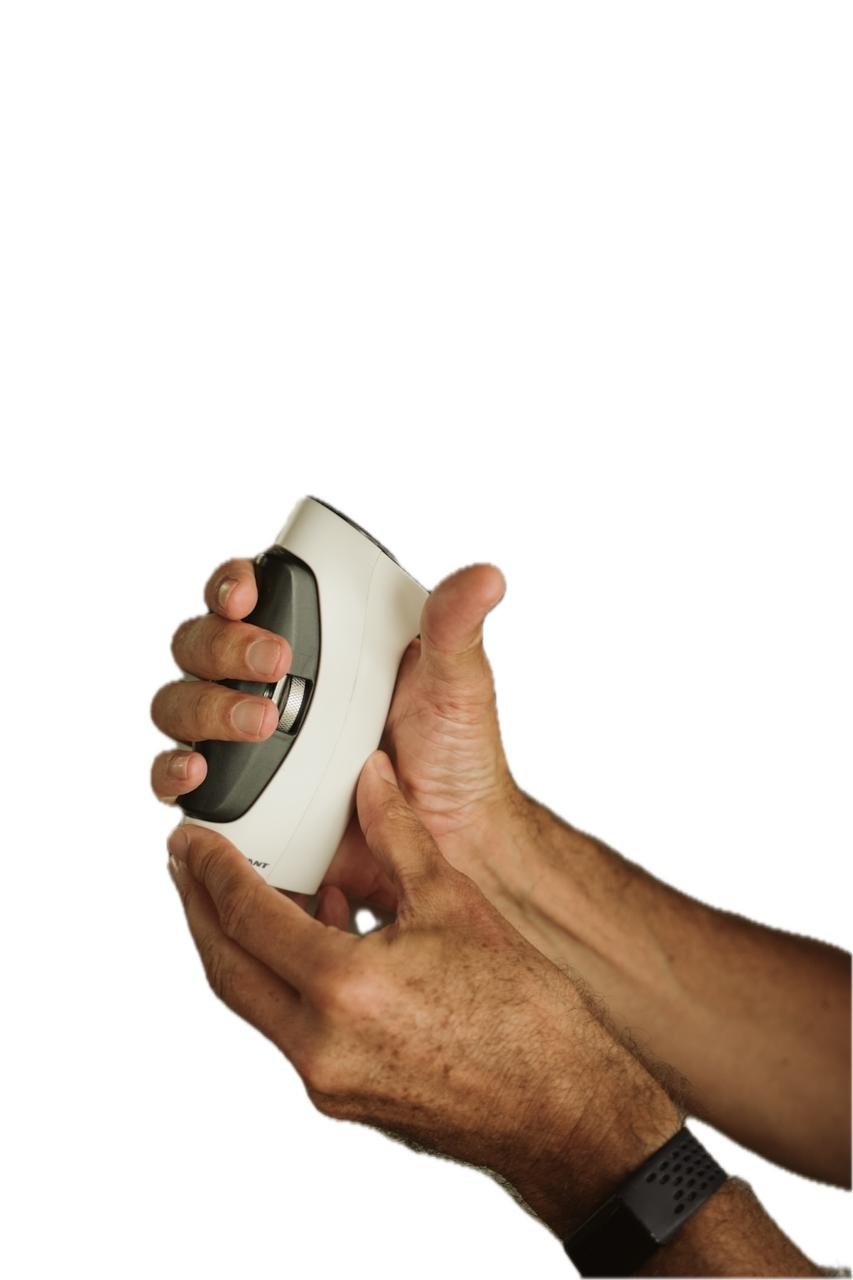
We use the same simple protocol at every retreat, so that arrival and departure values can be compared fairly.
Our protocol
Many guests worry that fasting will make them weaker. Research at Buchinger Wilhelmi, the clinic founded by the Buchinger family, found that maximal grip strength remained unchanged during a ten-day fast combined with daily physical activity, while leg strength even improved. This is why we combine fasting with daily movement and gentle strength exercises at every retreat.
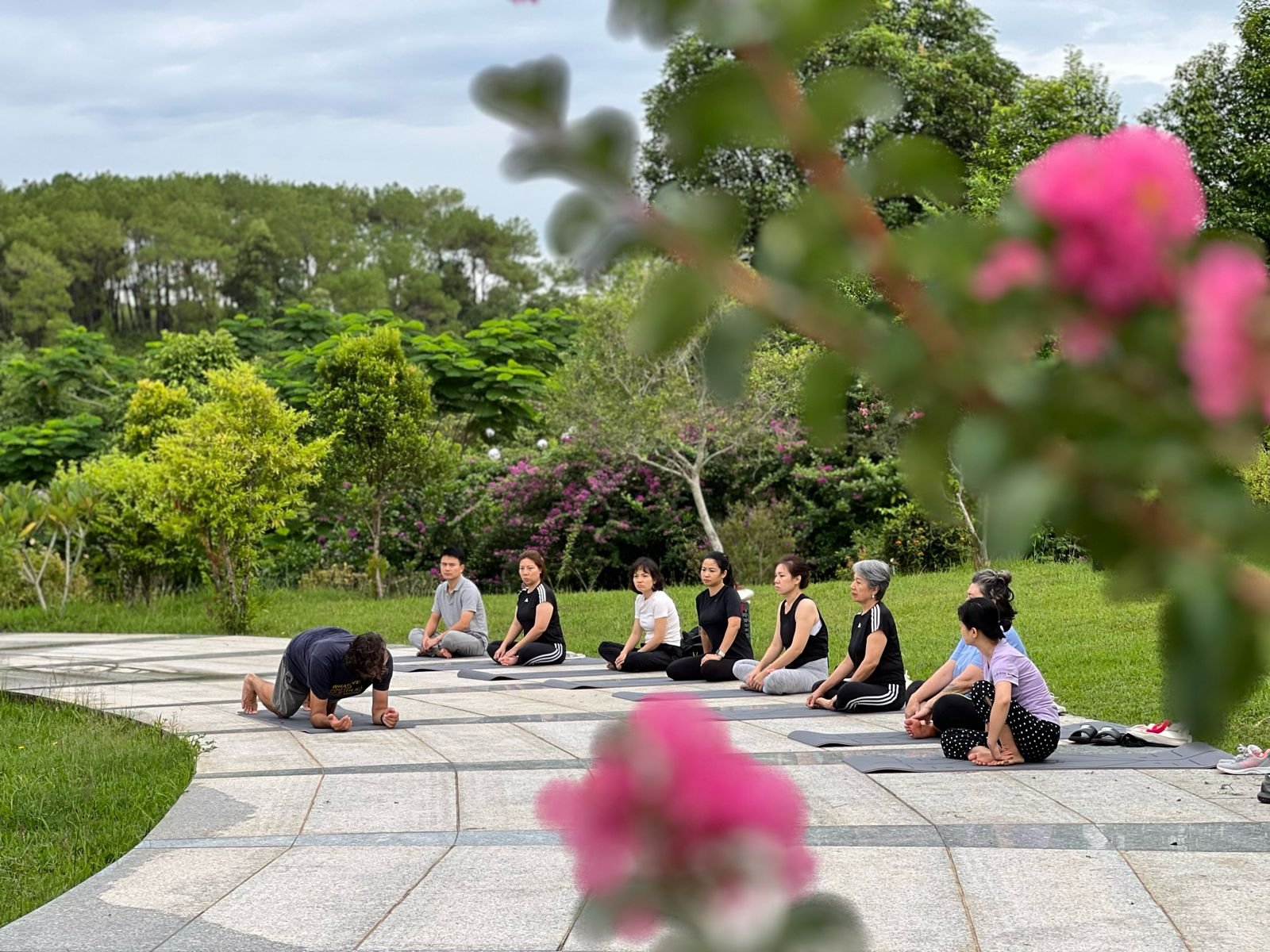
Grip strength responds well to training at any age. Studies in older adults with low muscle mass show that regular resistance training, ideally around three times a week, can raise grip strength by several kilograms within a few months. The most effective approach trains the whole body, not just the hands.
Two to three strength sessions a week form the foundation. Body weight, resistance bands, dumbbells or machines all work. Exercises such as rows, deadlifts, squats and push-ups challenge your grip as well as your larger muscles.
Five simple grip exercises
Everyday habits
If you have arthritis, a recent hand injury or carpal tunnel syndrome, start gently and stop if you feel pain. If you have high blood pressure, avoid holding your breath during maximal efforts and breathe out steadily as you squeeze.
Grip strength matters most for everyday independence, particularly from midlife onwards.
Grip strength is a window into overall health. Whole-body strength, fitness and good nutrition are what make the difference.
Muscles respond to training at any age. Even people in their eighties gain strength with regular, well-guided exercise.
Research on medically supervised Buchinger fasting combined with daily activity shows that muscle function is maintained.
Grip strength is a screening tool, not a diagnosis. Please consider speaking to your doctor if:
Signs worth discussing
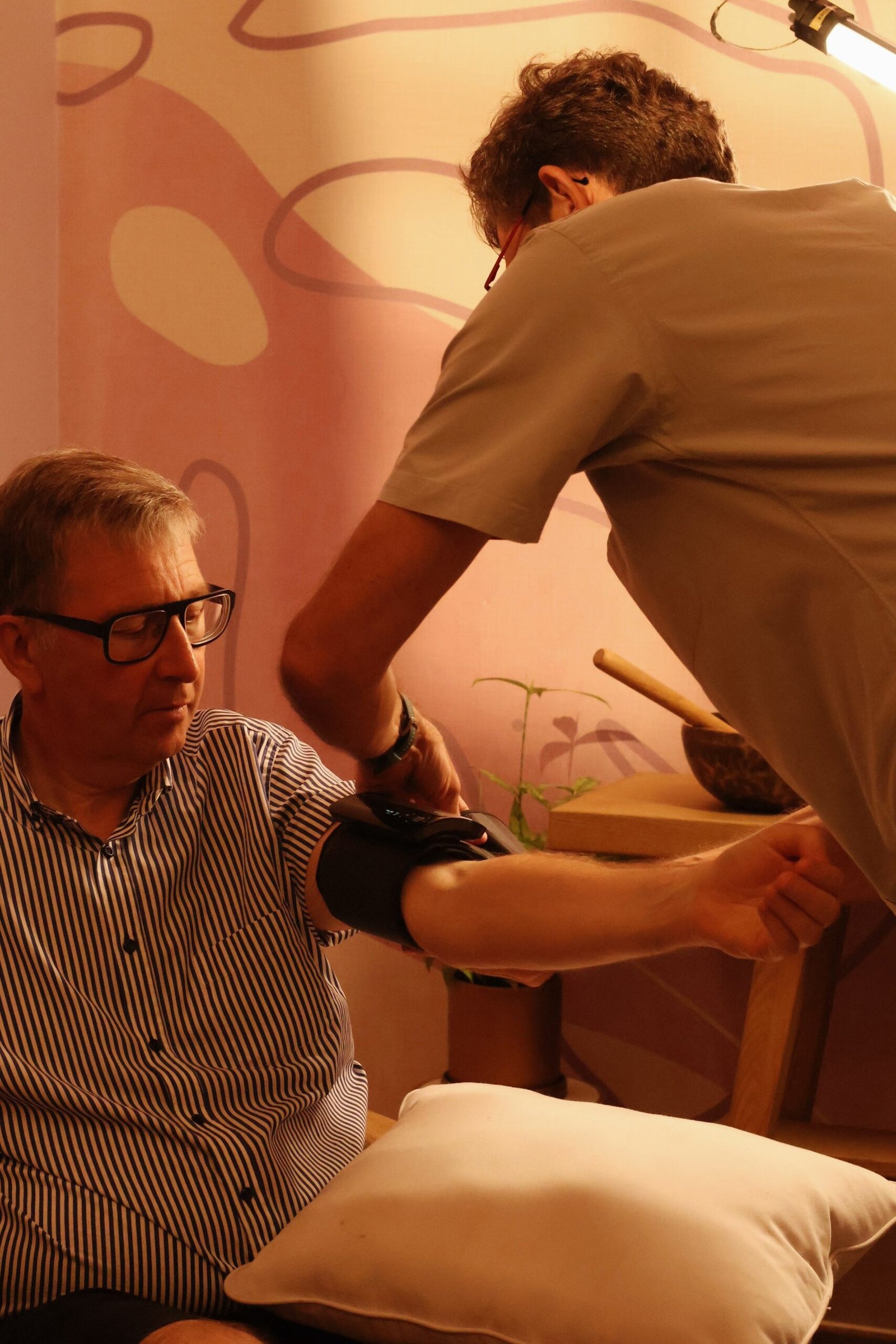
Our retreats combine Buchinger fasting with daily movement, gentle strength training, yoga and time outdoors. During your wellness check-ups on arrival and departure day, we measure your grip strength, explain what your result means and show you simple exercises you can continue at home. Seeing your own number, and knowing how it compares with others of your age, is often the clearest motivation to start.
Next Step
If you would like to understand your own strength and build habits that support healthy ageing, explore our upcoming retreats in Vietnam and find the one that fits your goals.