Key takeaways
- The real measure of a retreat is what you still do, and still enjoy, six months later.
- The building-up days at home are part of the fast. Gentle food first, then protein back on your plate.
- One small strength habit protects the muscle you need for hiking, travelling and lifting grandchildren.
- Stepping away from your phone in small, chosen ways keeps the calm going. Short daily anchors work better than one big detox.
- A simple check-in at day 7, 30, 90 and 180 helps you notice what is working, without any pressure.
It is Sunday evening, and you are home from Huế. Your suitcase is still by the door, and your body feels light and calm. Then your phone wakes up with forty-seven messages. That moment is where life after a fasting retreat really begins. What you do in the next few days and weeks decides whether the lightness stays with you or fades into a pleasant memory.
The good news is that keeping your reset alive needs no willpower and no strict rules. Instead, it asks for a few small choices you actually enjoy. This guide shares the ones our guests find helpful, from the first meals at home to a quiet walk at dawn.
What success looks like six months after a fasting retreat
Most people judge a retreat by how they feel on the last morning. However, a better question comes later: what are you still doing six months on? Perhaps you sleep better, walk more or enjoy a lighter dinner. Perhaps you simply feel more present with the people you love.
In other words, success is the life you want to keep living. That might mean hiking in Sa Pa at seventy, having energy for work, or travelling without needing a rest day. Some people call this your “playspan”, the years you can keep doing what you love. The science sits underneath, as support rather than as the headline.
Habits also take longer to settle than most of us expect. A 2024 systematic review of 20 habit studies found that health habits usually took two to five months to form. Even so, the range was huge, from 4 to 335 days. The review also found that morning practices and habits people chose for themselves tended to grow stronger. So give yourself months, not days, and pick a habit that feels like yours.
Reintroducing food gently: your building-up days
After a fast, your digestion has been resting, and it needs time to wake up. That is why the building-up days are part of the retreat, simply continued at home. On the last morning, every guest leaves with refeeding guidance and takeaway nourishment for the first days.
Our guide to building-up days after fasting walks you through each day with dishes that are easy to find anywhere in Vietnam. In short, it starts with soft, simple food. Then it brings gentle protein back on the second day and adds eggs and fish on the third. A light cháo (rice porridge) or a clear canh (vegetable soup) is a lovely place to start.
A few principles help along the way:
- Eat slowly, chew well and stop before you feel full.
- Favour real, whole food over processed meals while your palate is still clear.
- Bring protein back steadily over the following days, because this is where you protect your muscle.
- If you take regular medication or have a health condition, check your plans with your doctor.

One strength habit for the life you love
Many guests worry about losing muscle on a fast. Our article on fasting and muscle loss explains what the research says. Briefly, most early weight loss is not muscle, and protein afterwards is what counts.
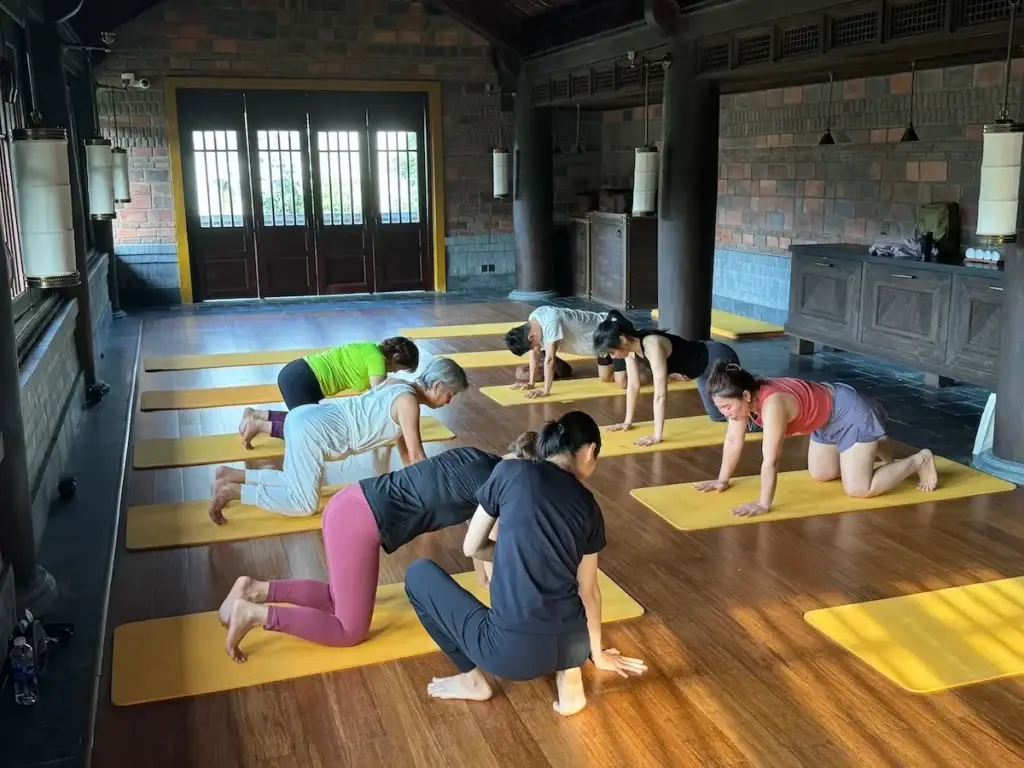
Muscle is also what carries you up the pagoda steps at Yên Tử or around a market with full bags. So you could try one small strength habit at home. For example, do five slow chair squats while the kettle boils, or ten wall push-ups before your shower. Once that feels easy, add a few calf raises. Our guide to gentle movement during a fast has more simple ideas.
The magic of missing out, at home
On retreat, missing out happens almost by itself. There are no meals to plan, no alcohol and plenty of quiet places. Many guests notice how much relief they feel when the news and notifications fall away. Back home, you can choose a little of that on purpose.
Research suggests it is worth it. In a 2025 trial with 467 adults, blocking mobile internet on smartphones for two weeks improved wellbeing, mental health and attention. People also spent more time with friends, exercising and outdoors. To be honest, though, the gains in wellbeing and mental health lessened somewhat once the block ended. A short break helps, but small daily anchors are what keep the benefit going.
Here are three gentle anchors you could try:
- A phone-light evening. Put the phone in another room after dinner, two or three nights a week.
- A screen-free first hour. Have your tea or coffee by the window before you check any messages.
- A walk without headphones. Let yourself hear the birds, the traffic and your own thoughts.
A weekly awe walk close to home
Awe is that feeling of standing before something vast or beautiful. It can come from mountains, sea, old trees or simple silence. In a study of 60 older adults, people took a 15-minute walk once a week for eight weeks. Those asked to look for awe reported more joy during their walks. In addition, they felt less daily distress than those on ordinary walks.
You do not need to travel far. In Hà Nội, you could walk around Hồ Gươm (Hoàn Kiếm Lake) at dawn, while the tai chi groups move by the water. In Huế, try the path along the Hương River (Perfume River) as the light changes. Meanwhile, in Đà Nẵng, an early walk on Mỹ Khê beach shows you the sea before the city wakes.
The method is simple. First, look for something vast, new or beautiful. Then pause for a few breaths. Finally, take one photo of the view rather than of yourself.

Managing a return to work and stress
The first week back at work is often the sharpest test of a reset. Deadlines, screens and other people’s urgency can quickly unsettle a calm nervous system.
Where you can, build a soft landing. Since our retreats end on a Sunday, you could keep Monday morning free of meetings. Likewise, protect one quiet ritual, such as a lunchtime walk, as an anchor that stress cannot easily remove. If the return feels heavier than expected, our piece on the signs of burnout and when you truly need a reset can help you read your own limits.
Write down why it matters to you
Habits last longer when they are tied to something you care about. So, before the retreat glow fades, take five minutes with a pen. Write down why this change matters to you, and keep asking “why?” until you reach the deeper reason.
“I want to eat better” might become “I want energy in the evenings”. Then, one more step, it becomes “I want to be truly present as my grandchildren grow up.” That last sentence is the one to keep. Put it in your wallet, on the fridge or as your phone’s lock screen.
Your six-month check-in card
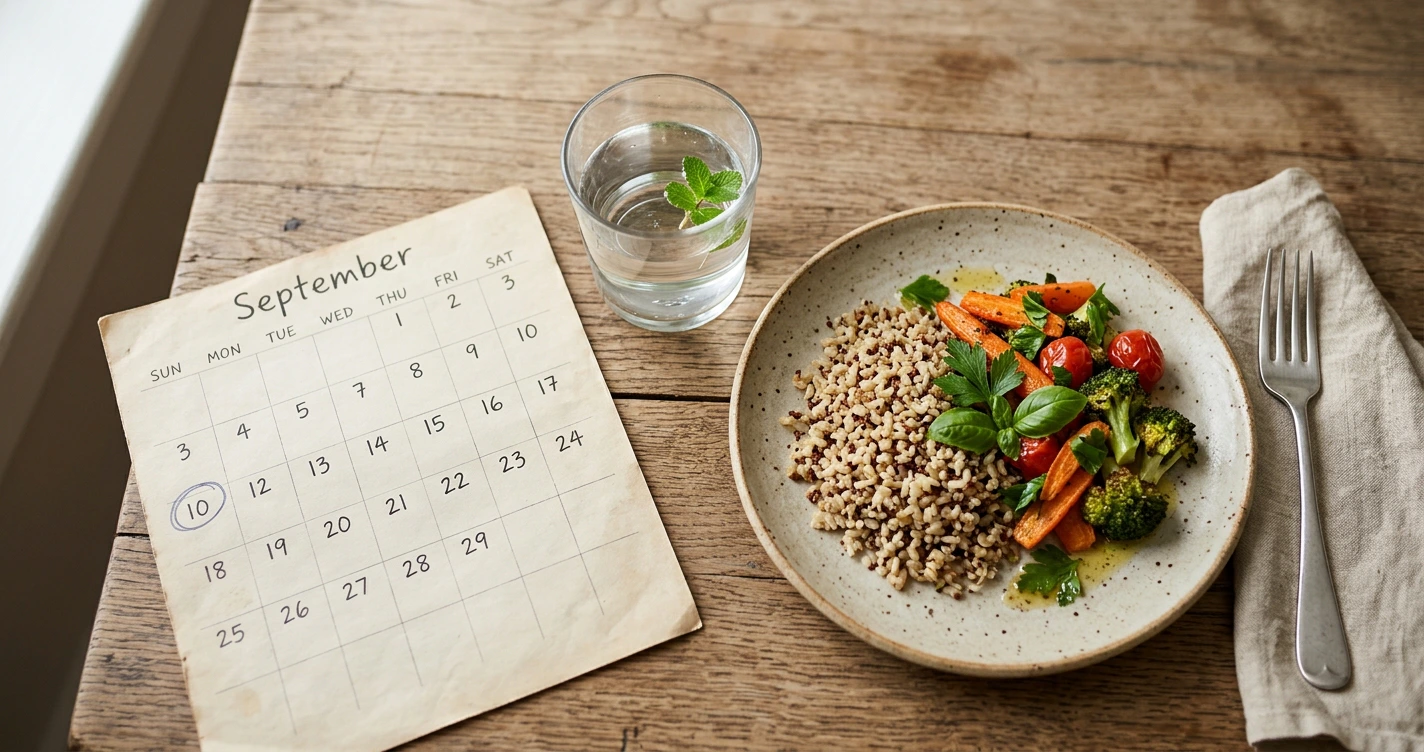
A habit is easier to keep when you check on it gently. You could save these four dates in your calendar on the day you get home. Each one has a single question, and there are no wrong answers.
| When | One question to ask yourself |
|---|---|
| Day 7 | Which food or routine did my body enjoy most this week? |
| Day 30 | Which one small habit am I still doing, and what makes it easy? |
| Day 90 | What am I doing more of that I love? |
| Day 180 | What do I want to carry into the next six months? |
If an answer surprises you, that is useful too. Simply adjust the habit, or swap it for one that fits your life better.
Support after your retreat
You are not on your own once you fly home. Each retreat includes personal wellness check-ins on arrival and departure. These cover weight, body composition on a smart scale, waist, blood pressure, grip strength, skinfold and AGEs, with a ketone test on the last day. As a result, you leave with your own numbers to compare at home.
After that, you receive refeeding guidance and a post-retreat check-in with our team. Past guests can also choose optional wellness coaching if they would like a steady companion through the first months. We work alongside your doctor, not instead of them, so do share your results at your next appointment.
Many people also find that a reset once or twice a year suits them well. If you are thinking about the next one, our guide on when to visit Vietnam for a retreat can help you plan. The Yên Retreat in Huế runs from 16 to 20 December 2026. Next, the Hồi Retreat in Đà Nẵng runs for the first time from 20 to 24 January 2027, and again from 2 to 6 March 2027. The “An” Retreat in the Yên Tử mountains follows from 17 to 21 March 2027.
Take-home tips for this week
- Choose one anchor only, and let it settle before adding another.
- Put your four check-in dates in your calendar tonight.
- Write your deeper reason on a card you will see every day.
- Plan one awe walk for this weekend, at a place you already love.
Frequently asked questions
How long do the benefits of a fasting retreat last?
It depends on what you keep doing afterwards. Many guests notice that the physical lightness fades within weeks if old habits return quickly. Yet the calm and the routines can last for months when you keep one or two small anchors.
What should I eat in the first days after a fasting retreat?
Start with soft, simple food such as cháo, soups and cooked vegetables. Then bring protein back steadily, as our building-up days guide explains step by step.
How can I keep using my phone less once I am home?
Choose small, regular anchors rather than one big break. For example, a screen-free first hour or a phone-light evening is easier to keep than a strict rule.
Is it normal to feel a dip in energy or mood after returning home?
Yes. Returning to work, screens and routine can feel jarring after the quiet of a retreat. A gentle re-entry, good sleep and daily movement usually smooth the transition. If the dip lasts, talk to your doctor.
If you would like to talk through your next step, you can book a discovery call with Dieter or view our retreats. Questions? Write to us, we are always happy to hear how your reset is going.