Movement Journal
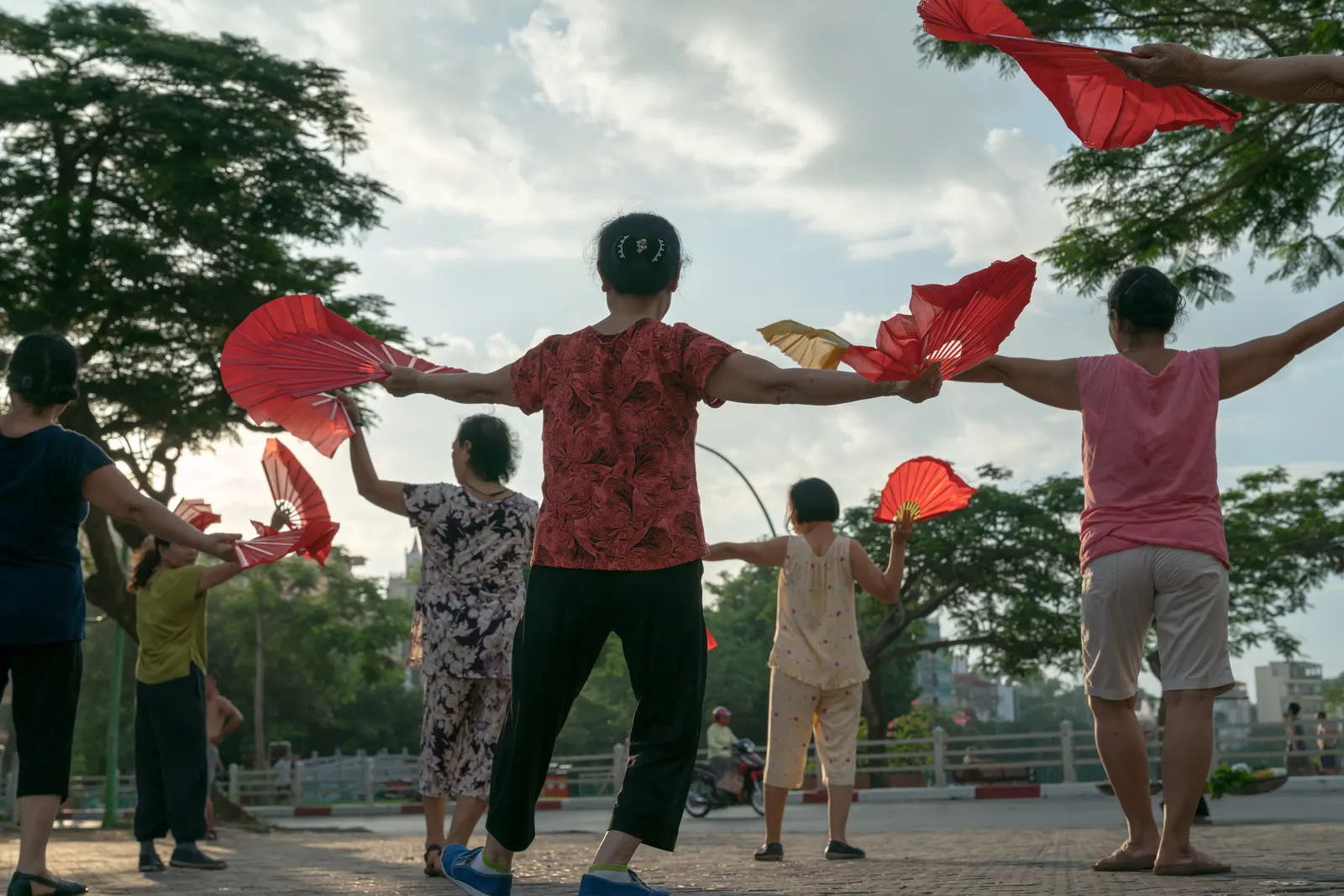
It is 5.30 in the morning at Hoàn Kiếm Lake. Anh Tuấn, 58, has just finished his phở and is about to sit down with his coffee. Around him, a group of women his age are laughing through a dance routine, and two men are hitting a shuttlecock so hard that both are out of breath. Tuấn eats well. But when did he last breathe like that?
A new review in the journal Mayo Clinic Proceedings has asked a question many of us wonder about. If you want a long and capable life, which matters more: exercise or diet? The answer is not “one or the other”. Still, it may change how you plan your week.
This article looks at what the newest studies show and why fitness deserves more attention. It also shares simple ways to build it into daily life in Vietnam, at any age.
In November 2026, two American researchers, Glenn Gaesser and Robert Sallis, published a review of studies that compared diet and exercise directly. Their conclusion was clear. Across many large studies, physical activity and fitness were more strongly linked with living longer than the quality of people’s diets.
However, they also wrote that “these findings do not diminish the importance of a healthy diet.” In other words, the message is not “skip the vegetables and go running”. Instead, it is that movement may be the part of a healthy life we take least seriously.
One study in the review stands out, because it measured both habits in the same people.
Journal: Journal of Sport and Health Science, 2024
Who: 85,545 adults in Australia aged 45 to 74, followed for about 11 years
What they found: a good diet was linked with a 17% lower risk, and being active for 150 to 300 minutes a week with a 34% lower risk. Some vigorous activity added about 20% lower risk at the same weekly total. People who did both were at the lowest risk.
Limits: an observational study with self-reported habits. The diet questions were short, which may understate the role of food.
You may have seen this study shared online as “exercise beats diet twice over”. That goes a little too far. The two figures were measured against different groups, so they are not a straight contest.
A second look at the data is reassuring for anyone who loves good food. A 2026 Harvard study of 106,387 adults asked people about their habits up to 15 times over 29 years. With these repeated measures, diet and activity came out about equal. People who did both well had a 38% lower risk of dying during the study.
The authors also noticed something useful. Activity mattered most for people whose diet was poor, and diet mattered most for people who moved little. So whichever habit is weaker for you is probably the best place to start.
Similarly, a study of 346,627 adults in the UK Biobank came to a simple conclusion. High levels of activity could not fully cancel out the effects of a poor diet. A study of 9,349 adults in Norfolk, England, adds a hopeful detail. People who improved both habits in midlife had a 40% lower risk than those who kept both low.

Fitness here means how well your heart, lungs and muscles work together when you move. Researchers often call it cardiorespiratory fitness and measure it in METs, a unit of effort.
A 2022 analysis of 37 studies with 2.26 million people found that the fittest third had a 45% lower risk of dying early than the least fit. Each small step up in fitness, one MET, was linked with about 11% lower risk.
The good news is that fitness responds to training. That is why the effort level matters. A slow stroll is lovely for digestion and mood, yet it does little to raise your fitness. A brisk walk uphill, a fast game of badminton or cycling against the wind asks a little more of your heart. That is where fitness grows.
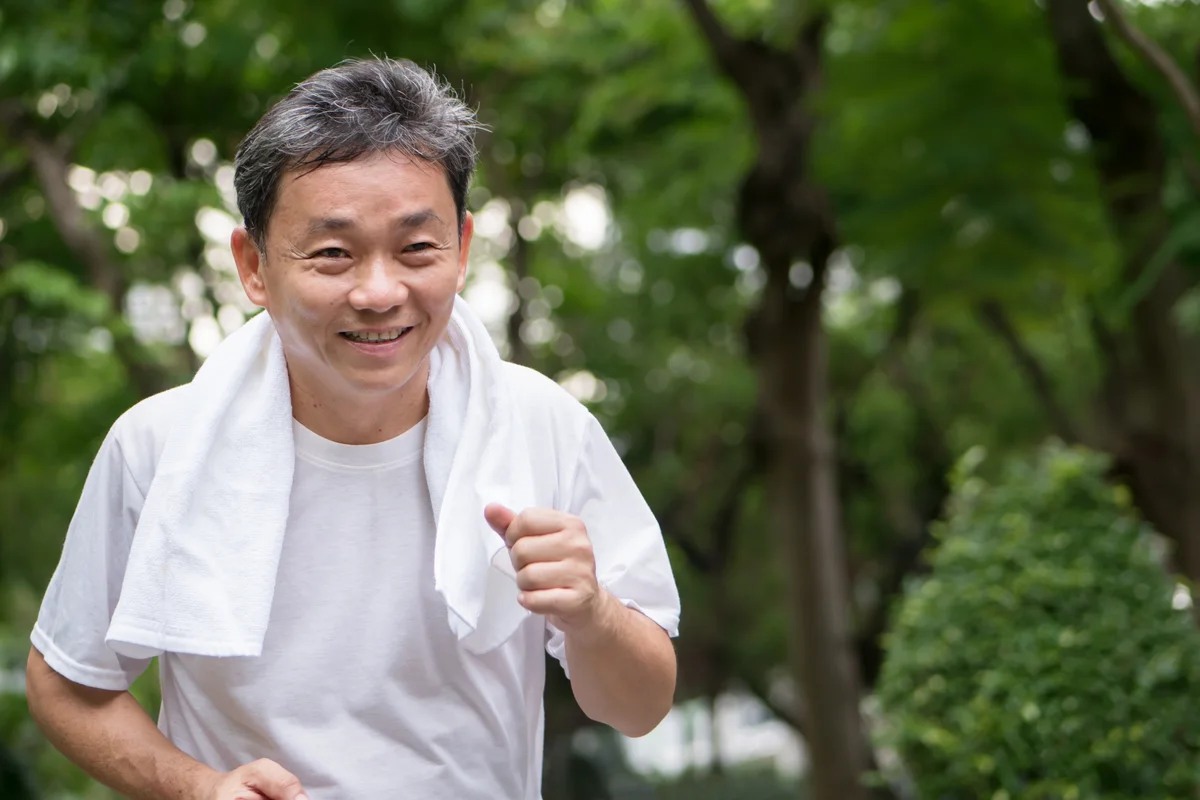
Fortunately, a simple test helps. During moderate activity, you can talk but not sing. During vigorous activity, you can only say a few words before you need a breath. Both count, and a mix of the two seems to work best.
Two small, older experiments show how quickly the body notices inactivity. In a 2013 trial, 26 young men ate 50% more than usual for a week and took fewer than 4,000 steps a day. Their insulin response to a sugary drink doubled. In contrast, the men who ran for 45 minutes a day on the same extra food showed no such change.
A similar 2014 study gave young men an extra 2,000 calories a day for two weeks. Those who walked 10,000 steps a day gained less belly fat than those who walked 1,500.
These studies were tiny and short, and they only included young men. Even so, they make a point that fits daily life well. Movement helps the body handle food. Our article on walking after meals explains a gentle way to use this every day.
Many people in Vietnam are busy and on their feet. However, most of that activity comes from work, not from choice. The official national health survey shows the gap clearly.
Life is also changing fast. Desk jobs, air-conditioned offices and nearly 80 million motorbikes mean many of us move less than our parents did. The heat and, in some cities, the air add a reason to stay indoors.
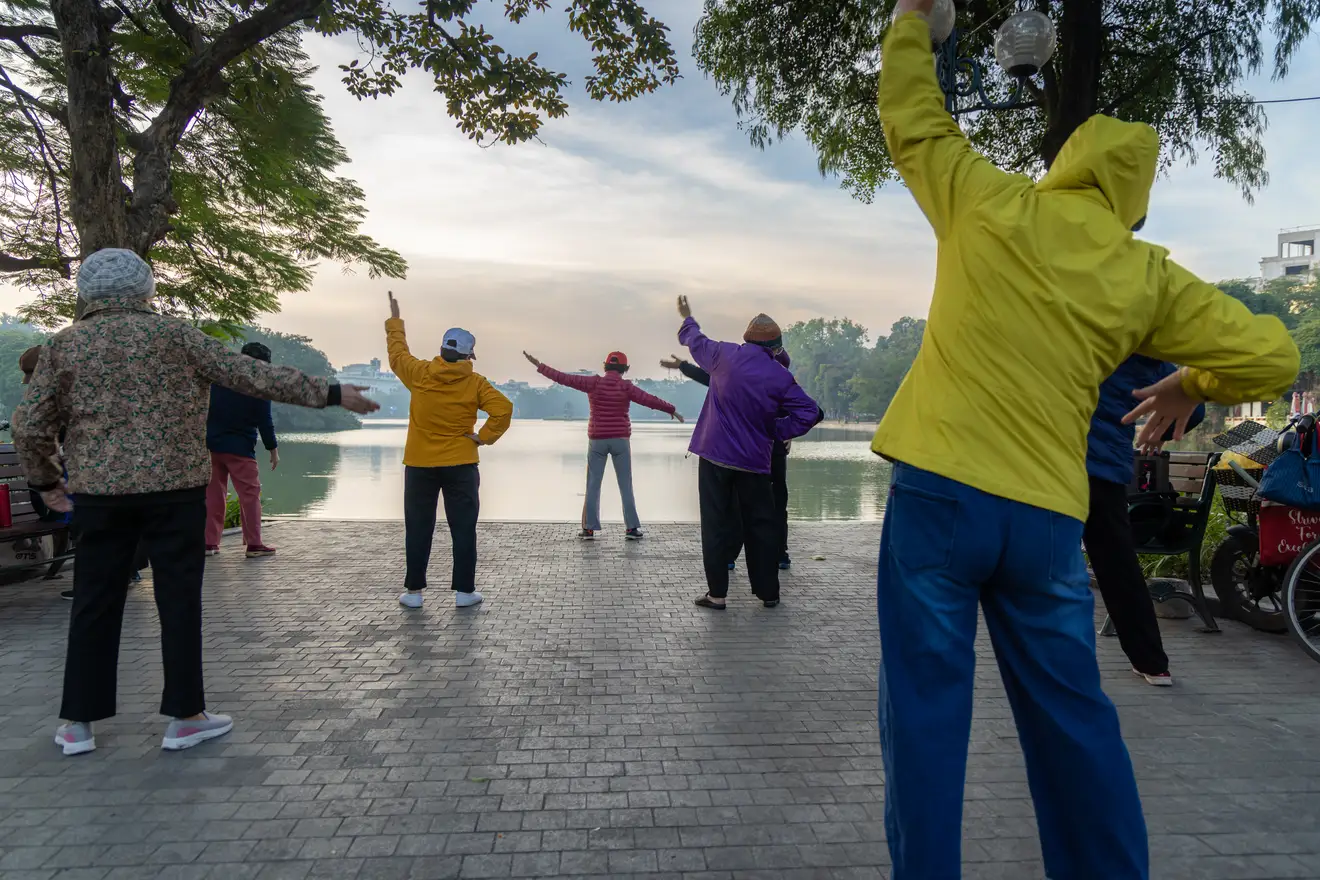
Yet Vietnam also has a joyful movement culture. Parks and lakes fill before sunrise with dancers, tai chi groups and badminton players. Pickleball courts are appearing everywhere, and many players say they come as much for friends as for fitness. So the habits are already here. It is often just a matter of joining in, a little more briskly.
You do not need a gym membership or an hour a day. Several recent studies suggest that small, regular amounts make a real difference.


What does a short burst look like? For example, it could mean climbing the stairs to your flat quickly, carrying shopping up a hill or walking fast to catch a friend. Because these moments are so short, they fit into almost any day.
Starting later still counts, too. In a large study of over 315,000 Americans, people who became active between 40 and 61 had a risk similar to those who had been active all their lives. For strength ideas, see our article on strong muscles for a long life.
Walk through almost any Vietnamese neighbourhood at sunrise or dusk, and you will hear the soft tock of a shuttlecock. People play in parks, alleys and school yards, and on lines chalked across quiet streets. Besides, all you need is two rackets, a shuttle and a friend. And on rainy days, indoor courts can be rented by the hour.
That makes badminton a good match for the research. A single rally asks for short bursts of effort, quick changes of direction and a little strength. A 2022 review of 27 studies linked regular play with better heart and lung fitness, strength and mood. One study in it rated a friendly match as vigorous activity.

An older Danish study adds another angle. The Copenhagen City Heart Study followed 8,577 adults for up to 25 years. On average, compared with people who did not exercise, badminton players lived 6.2 years longer. Sports played with other people, such as tennis, badminton and football, were linked with the largest gains. The authors think the social side may play a part. Because the study was observational, it cannot prove cause. Still, it is a lovely reason to pick up a racket.

In the heat, timing helps. The Ministry of Health suggests avoiding the sun between 10 am and 4 pm, so early mornings and evenings suit brisk activity best. Drink water regularly, and take it easier on very hot or humid days. In Hà Nội and other cities, check the air quality first. On poor-air days, a lakeside walk away from main roads or an indoor session is a sensible choice.
If you have a heart condition, diabetes or kidney disease, or you notice chest pain, dizziness or unusual breathlessness, please talk to your doctor before you add vigorous activity. Starting light and building up slowly suits almost everyone.
So here is a gentle way to find out what works for you. Choose one row a day and notice how you feel afterwards.
A question for you
Which activity made you forget you were exercising? That one is worth keeping.
On our retreats, the fasting days are for gentle movement only. You walk every day, practise yoga and do light bodyweight or band exercises. Harder efforts wait until after the fast, as our article on fasting and muscle explains.
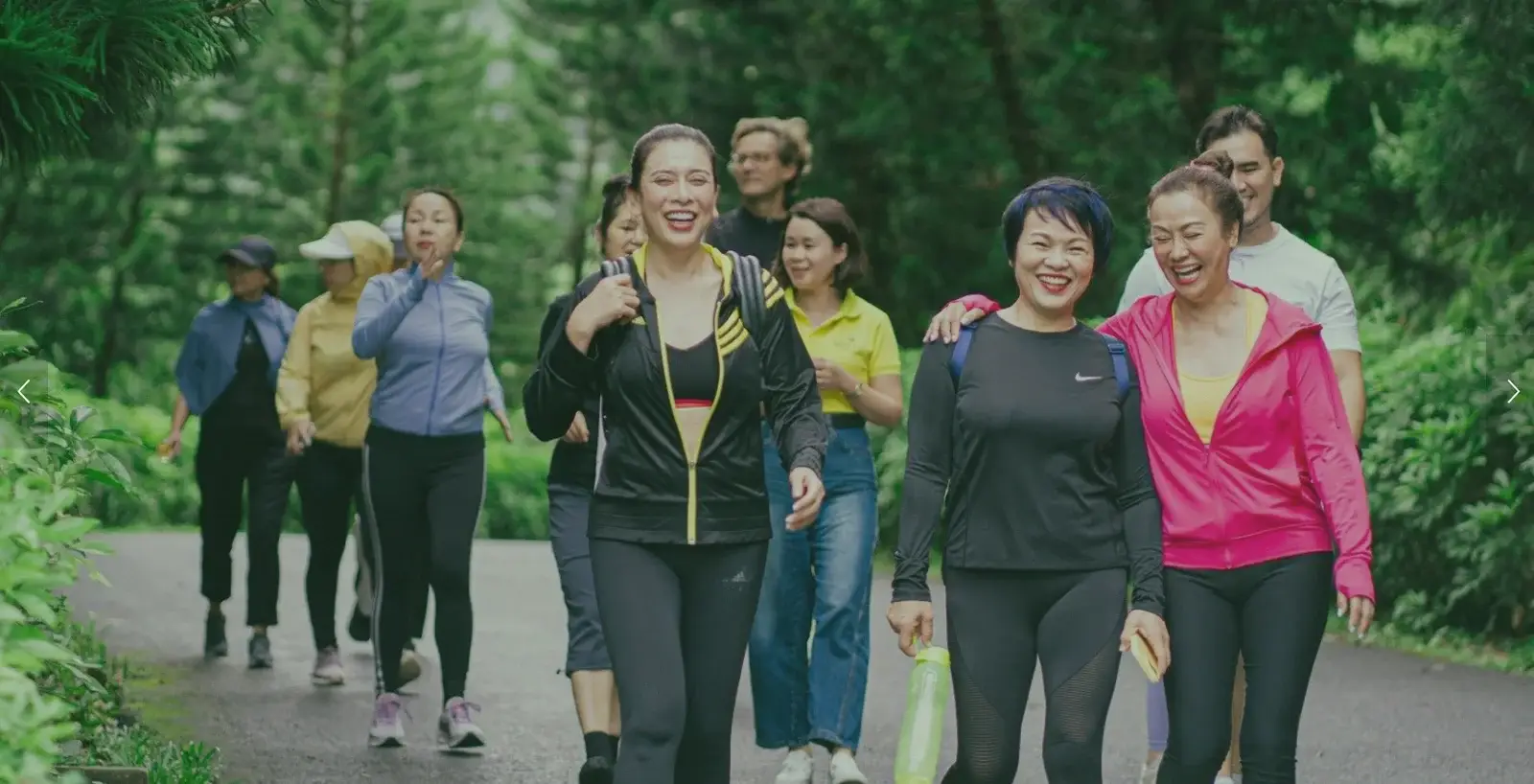
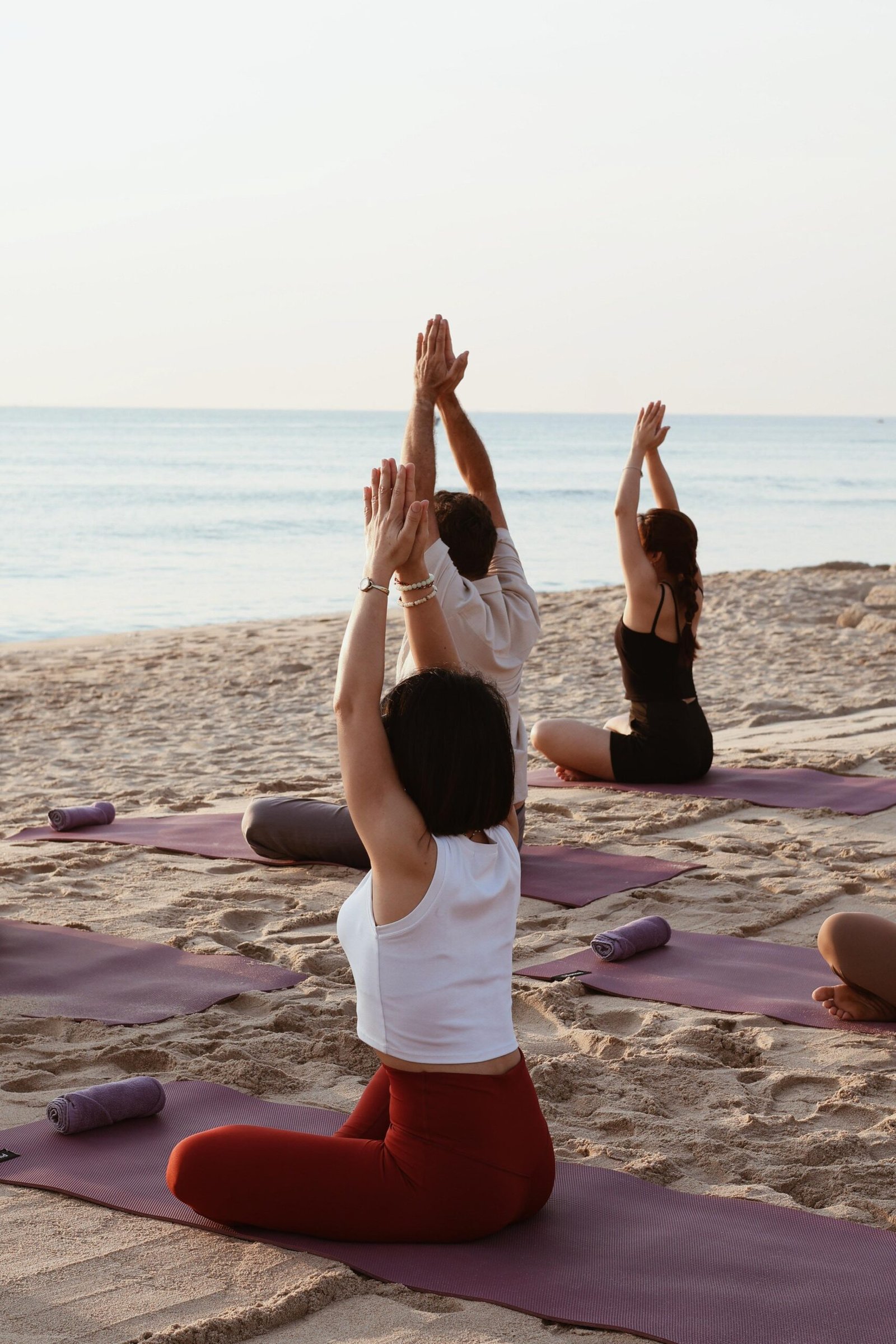
Still, each retreat is built around moving outdoors, often with a little awe along the way. On the “An” Retreat, you climb the pagoda paths of Yên Tử. On the Yên Retreat, you cycle through the valley near Huế. On the Hồi Retreat, you walk on the beach and through the Marble Mountains, and you hike up Sơn Trà to watch the sunrise.

In fact, many guests tell us these walks are what they miss most at home. That is why our building-up days guide includes a plan for moving more in the weeks after your fast.

Our tip
You could try these in the coming month:
•Pick the habit that is weaker for you. If you already eat well, give your next bit of energy to movement, and the other way round.
•Let yourself get a little out of breath a few times a week, outside your fasting days.
•Count your stairs, not only your steps. Short climbs add up.
•Book movement with a friend. A fixed time at the park is easier to keep than a promise to yourself.
•Check again in four weeks. Notice how easily you climb, carry and keep up with the people you love.

A long life matters most when it is a life you can enjoy. Moving well is how you stay able to say yes to the walk, the game and the trip.
Share this article
Questions about moving more, or about how movement fits into our retreats? We would be glad to hear from you. Write to us.
With warm wishes,
Dieter and the Vietnam Detox team
Next step
Our preventive wellness retreats combine Buchinger fasting, daily walks, hikes and yoga in beautiful places across Vietnam.
 "An" Retreat @ Legacy Yen Tu MGalleryLegacy Yên Tử MGalleryMountain stillness, mindfulness and guided fasting in Yên TửNext retreat: 17–21 March 2027Discover →
 Yên RetreatAlba Wellness Valley, HuếNatural hot springs, herbal baths and deep restNext retreat: 16–20 December 2026Discover →
 Hồi Retreat @ Fusion Resort & Villas Da NangFusion Resort & Villas Da NangSunrise beach walks, sea air and gentle fasting by the coastNext retreat: 20–24 January 2027Discover →